


The integration of Artificial Intelligence (AI) with Customer Relationship Management (CRM) systems is revolutionising the way businesses interact with customers.
At the forefront of this transformation is Salesforce, with its robust AI platform, Einstein.
This blog delves into the symbiotic relationship between AI and CRM, the pivotal role of data, and best practices for leveraging AI-enhanced CRM systems.
Understanding AI and CRM
Definition of Salesforce AI
AI and CRM Overview
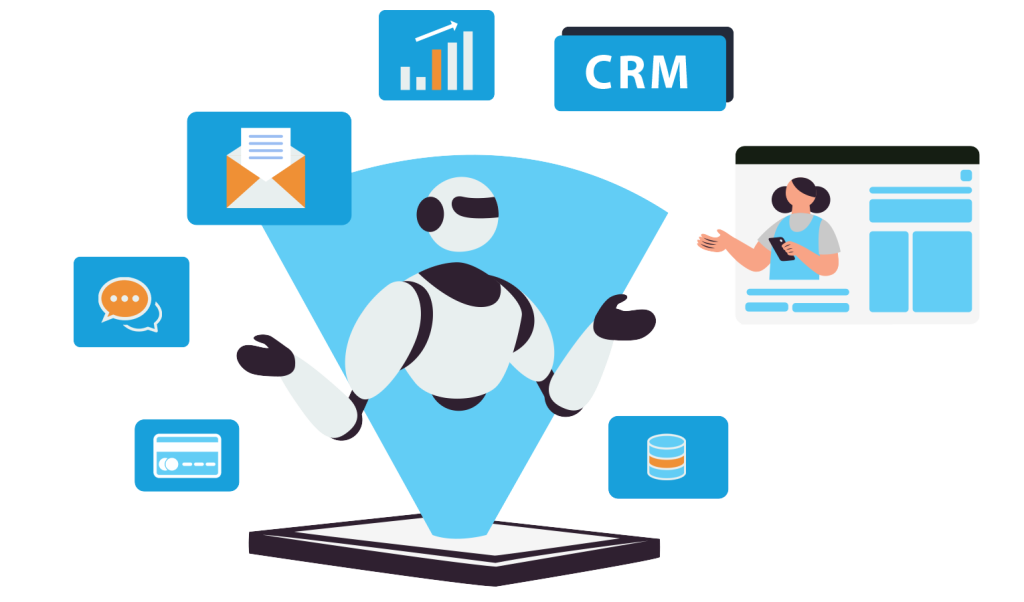
AI CRM refers to the use of artificial intelligence technologies to enhance and optimise CRM systems.
This integration allows businesses to leverage AI’s capabilities to automate tasks, gain deeper insights from data, and personalise customer interactions.
The importance of AI CRM lies in its ability to transform raw data into actionable insights, improving decision-making, enhancing customer experiences, and driving business growth.
Benefits of Integrating AI with CRM Systems
- Enhanced Customer Insights: AI can analyse vast amounts of customer data to uncover patterns and trends that human analysts might miss, providing deeper insights into customer behaviours and preferences.
- Personalisation: AI enables highly personalised customer interactions by analysing data to predict what individual customers want or need, thereby improving customer satisfaction and loyalty.
- Automation of Routine Tasks: By automating repetitive tasks such as data entry, lead scoring, and email responses, AI frees up valuable time for employees to focus on more strategic activities.
- Improved Forecasting: AI’s predictive analytics capabilities help businesses forecast sales, anticipate customer needs, and identify potential issues before they arise, allowing for proactive management.
Salesforce AI Integration
Salesforce’s AI Platform – Einstein
Salesforce Einstein is an AI technology built into the Salesforce platform, designed to bring AI capabilities directly to CRM users.
It enables businesses to harness the power of AI without the need for extensive technical knowledge or additional infrastructure.
Key AI Capabilities Provided by Salesforce
- Einstein Analytics: Provides advanced data analysis tools to transform data into actionable insights.
- Predictive Analytics: Uses machine learning algorithms to forecast future customer behaviours and trends.
- Natural Language Processing (NLP): Enables understanding and processing of human language, improving customer interactions through chatbots and automated responses.
- Image Recognition: Allows for the analysis of visual data, enhancing capabilities in areas such as product recognition and visual search.
- Automation: Streamlines and automates routine tasks, improving efficiency across sales, marketing, and customer service functions.
Data as the Backbone of AI CRM
Importance of Data in AI CRM
Role of Data in Powering AI Algorithms and Models
Data is the lifeblood of AI CRM systems. AI algorithms rely on vast amounts of data to learn, make predictions, and provide insights.
The quality, diversity, and volume of data directly impact the accuracy and effectiveness of AI models.
Types of Data Used in CRM
- Customer Interactions: Data from emails, phone calls, social media interactions, and in-person meetings.
- Purchase History: Records of past purchases, frequency, and patterns.
- Behavioural Data: Information on how customers interact with websites, apps, and other digital platforms.
- Demographic Data: Customer profiles, including age, gender, location, and other relevant demographic information.
Data Collection and Management
How Salesforce Collects and Manages Customer Data
Salesforce collects customer data through various channels such as web forms, email campaigns, social media, and direct customer interactions.
This data is then stored in a centralised CRM database, where it can be accessed and analysed by AI tools like Einstein.
Ensuring Data Quality and Integrity for Accurate AI Insights
Maintaining high-quality data is crucial for generating accurate AI insights. Salesforce ensures data quality and integrity through:
- Data Validation: Implementing checks to ensure that the data entered into the system is accurate and complete.
- Data Cleaning: Regularly updating and correcting data to remove duplicates, errors, and inconsistencies.
- Data Integration: Combining data from various sources to create a comprehensive and unified view of each customer.
How Salesforce Uses AI With Data
Einstein
Einstein Analytics and Its Role in Data Analysis
Einstein Analytics is a powerful data analysis tool within Salesforce that uses AI to process and interpret large datasets.
It provides users with interactive dashboards, reports, and visualisations that make it easy to understand complex data and derive actionable insights.
How It Provides Actionable Insights from Vast Datasets
- Sales Performance Analysis: Identifying top-performing sales reps, products, and regions.
- Customer Segmentation: Grouping customers based on similar characteristics and behaviours to tailor marketing efforts.
- Operational Efficiency: Analysing business processes to identify bottlenecks and areas for improvement.
Predictive Analytics
How Salesforce Uses Predictive Analytics to Forecast Customer Behaviour and Trends
Salesforce uses predictive analytics to analyse historical data and identify patterns that can forecast future customer behaviours and trends.
These predictions help businesses make informed decisions and anticipate customer needs.
Predictive Models for Sales Forecasting, Customer Churn, and Lead Scoring
- Sales Forecasting: Predicting future sales based on past performance, market conditions, and other relevant factors.
- Customer Churn: Identifying customers at risk of leaving and implementing retention strategies.
- Lead Scoring: Ranking leads based on their likelihood to convert, allowing sales teams to prioritise their efforts effectively.
Personalisation
Utilising AI to Personalise Customer Experiences Based on Data Insights
AI enables businesses to personalise customer experiences by analysing data to understand individual preferences and behaviours.
This personalisation can be applied across various touchpoints, from marketing campaigns to customer service interactions.
Personalised Marketing Campaigns and Customer Interactions
- Personalised Email Campaigns: Using AI to tailor email content based on individual customer preferences and behaviours, resulting in higher engagement rates.
- Customised Product Recommendations: Providing personalised product suggestions on e-commerce platforms based on previous purchases and browsing history.
- Targeted Customer Support: Offering personalised support solutions by analysing past interactions and predicting future needs.
Automation
Automating Routine Tasks Using AI-Driven Workflows
AI-driven automation helps businesses streamline routine tasks, improving efficiency and allowing employees to focus on higher-value activities.
Automation in Sales, Marketing, and Customer Service
- Sales: Automating lead scoring, follow-up emails, and meeting scheduling.
- Marketing: Automating campaign management, customer segmentation, and performance tracking.
- Customer Service: Automating responses to common customer inquiries using chatbots and virtual assistants.
Conclusion
The integration of AI with CRM systems, exemplified by Salesforce’s Einstein, represents a significant advancement in how businesses manage and utilise customer data.
By understanding the importance of data, leveraging AI capabilities, and implementing best practices, businesses can enhance customer experiences, improve operational efficiency, and drive growth.
At Westbrook, we are committed to helping you navigate this transformation and unlock the full potential of AI-enhanced CRM systems. For more information and expert guidance on integrating AI with your CRM, visit us at https://westbrook.co.uk.